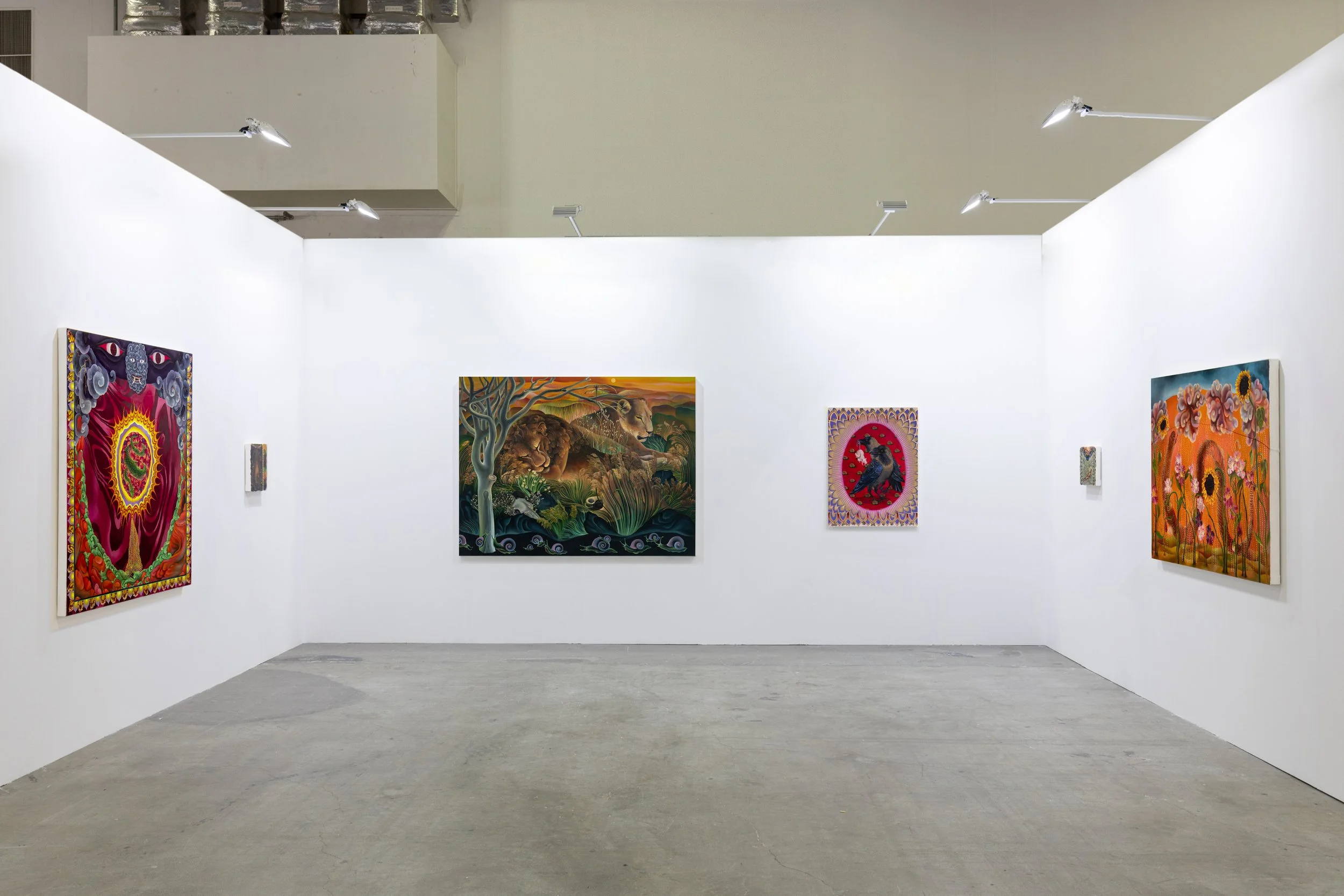
The Forest Breathes
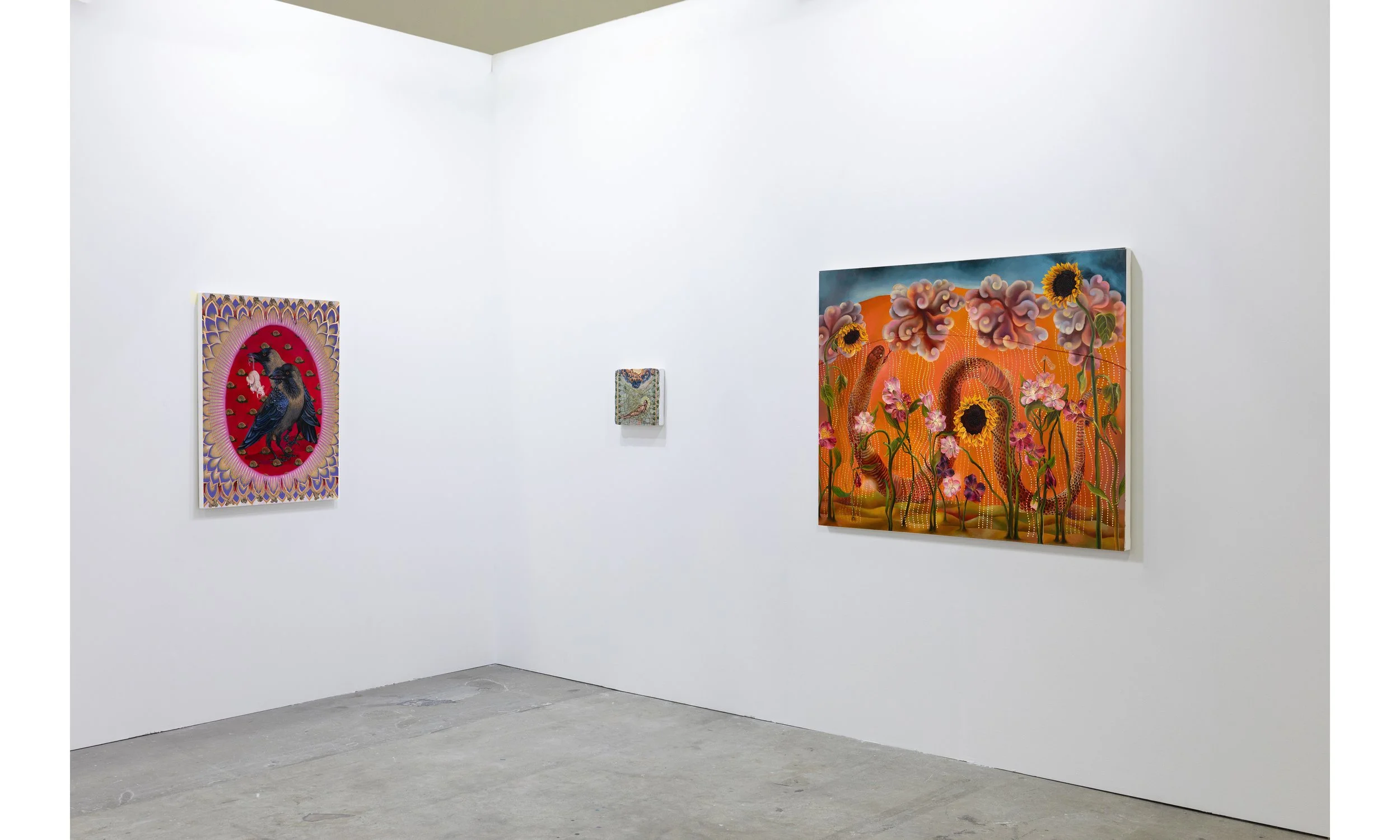
A Solo Presentation at Art SG with Fridman Gallery
January 2025
Ramakrishnan’s body of work comprises a dynamic and mutable “ecology of selves.” This phrase is borrowed from anthropologist Eduardo Kohn, whose book How Forests Think (2013)… questions what Kohn terms “our central assumptions about what it means to be human—and thus distinct from all other life forms.” Ramakrishnan’s paintings, too, seed important dreams about the evolution of a multispecies personhood.
- Alex A. Jones
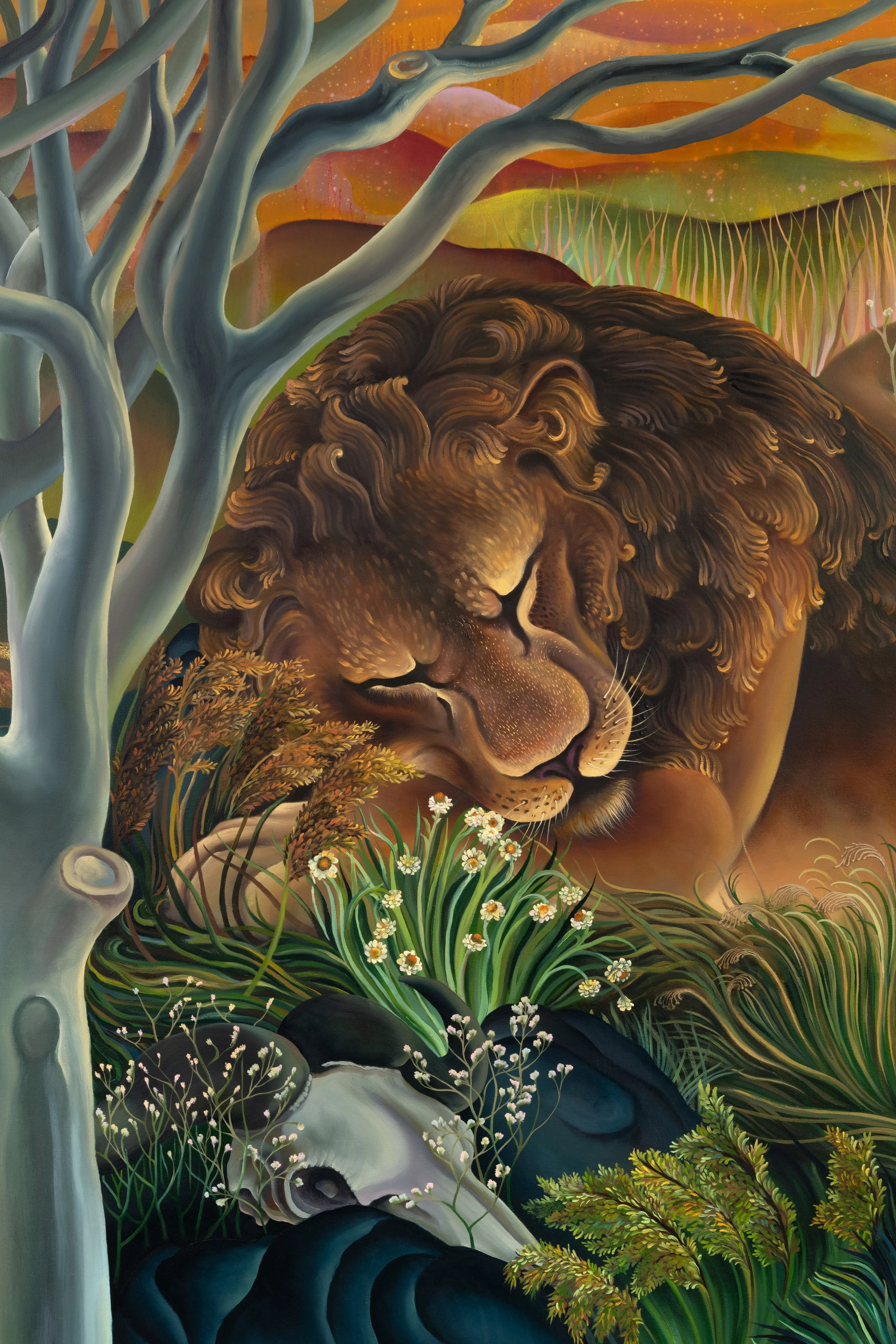
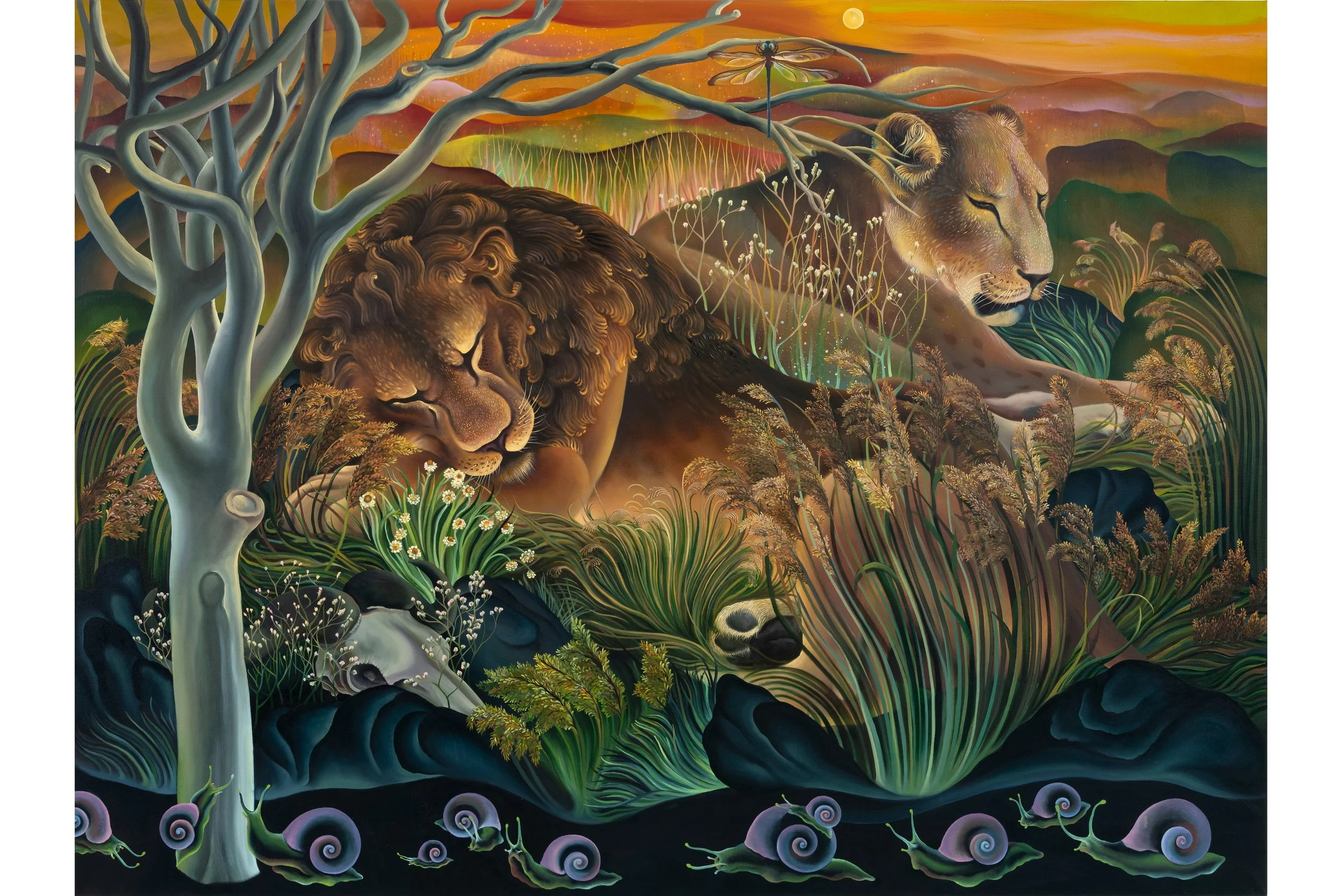
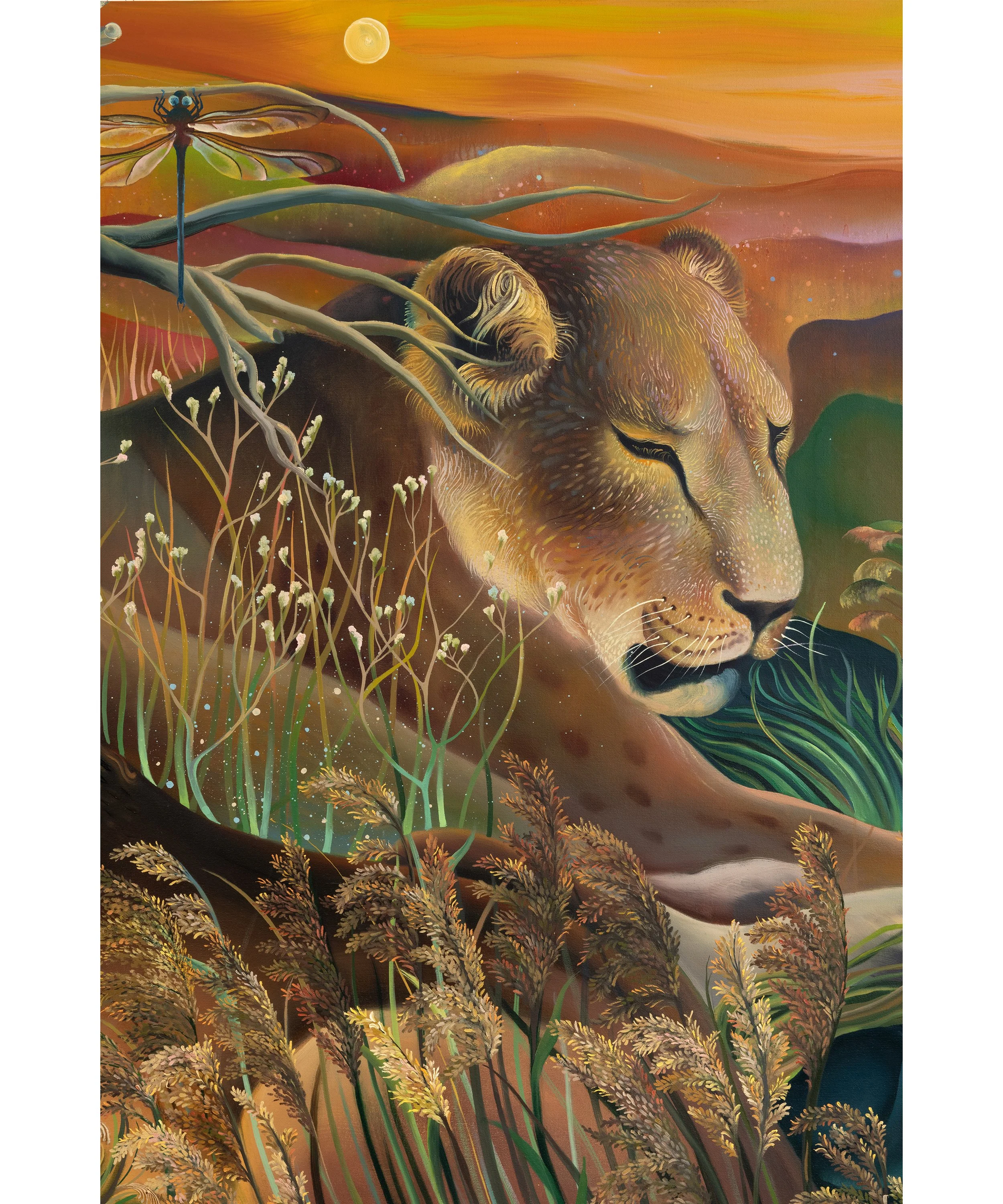
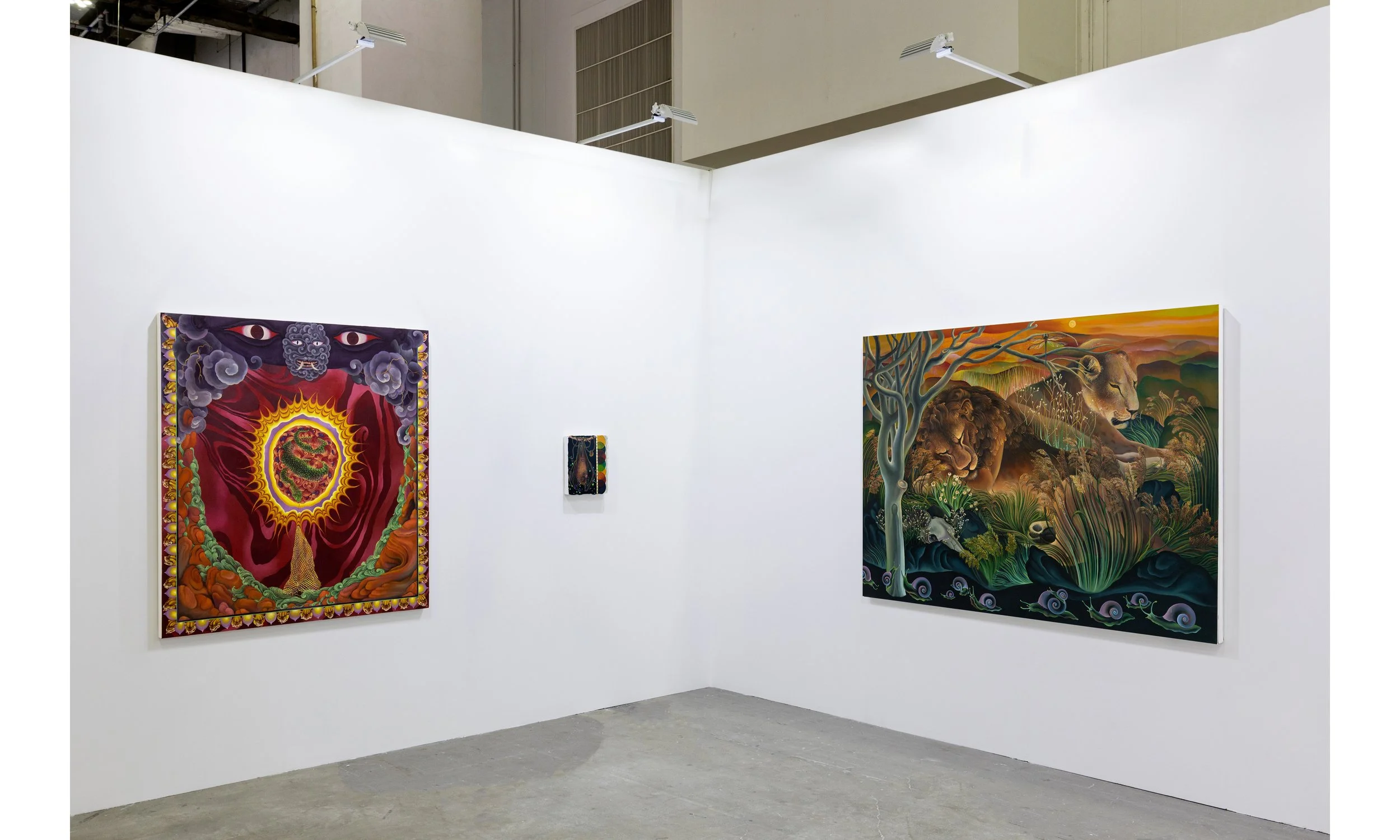
In her painting Once the World Was Perfect (2024), two lions sleep beside each other under the setting sun, captured in a state of intimate vulnerability. Though this is the largest piece in the artist’s new body of work, it exudes a secret bliss and opulence that recalls Persian miniature painting, an art form designed to be kept in a special album and looked at privately. Beneath the feline sleepers, in the black earth below their bodies—or, more likely, in the symbolic underworld of their dreaming—glides a parade of technicolor snails.
In recent decades, as neuroscience has accumulated great importance in our understanding of mind and personhood, significant resources have been devoted to the investigation of whether or not other animals actually dream. The absurdity of this question is symptomatic of a human culture that believes its own experience of life is fundamentally more complex than that of other species.
- Alex A. Jones
Artwork Gallery
Artwork Gallery
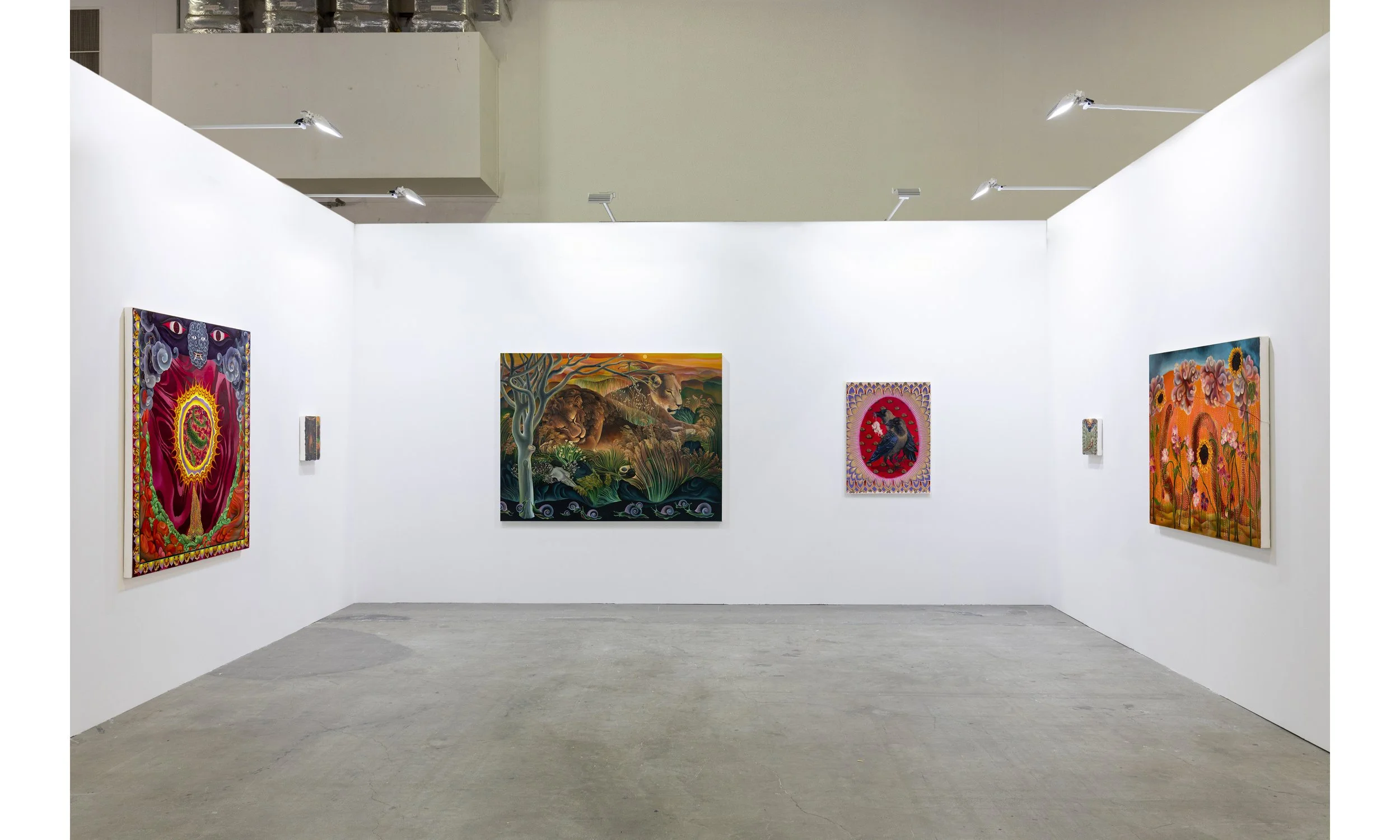
Scroll to see full screen images, details, and installation
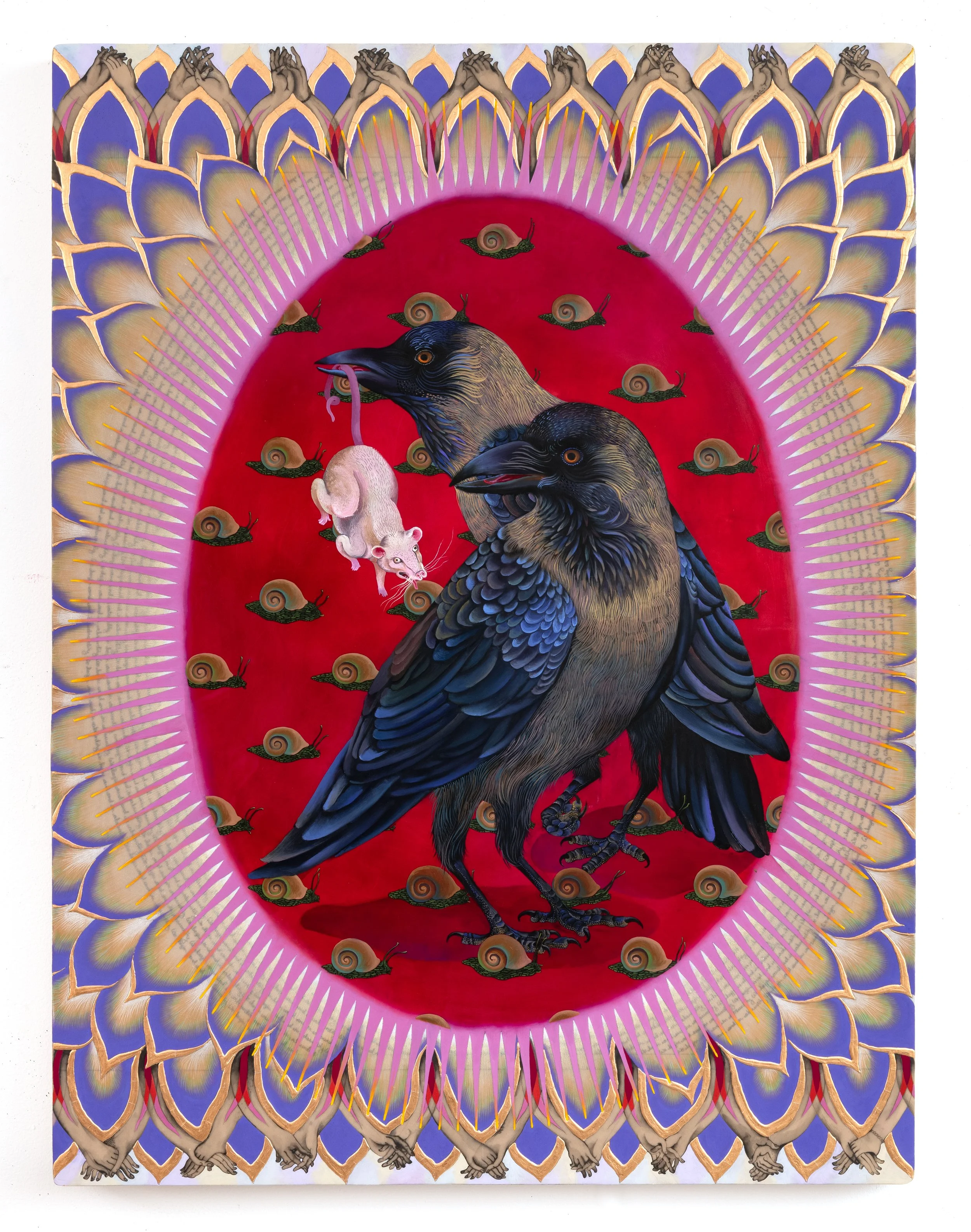
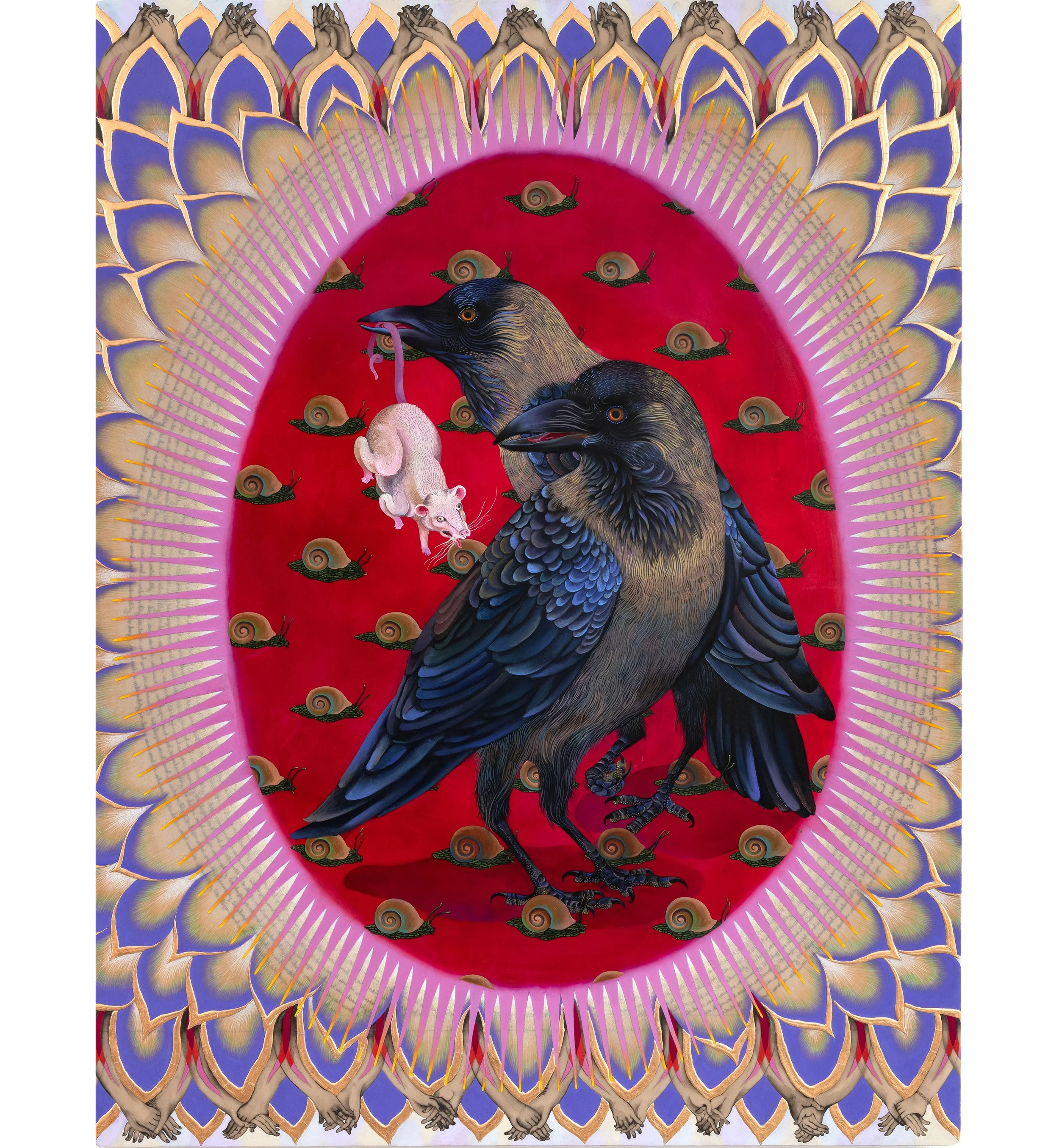
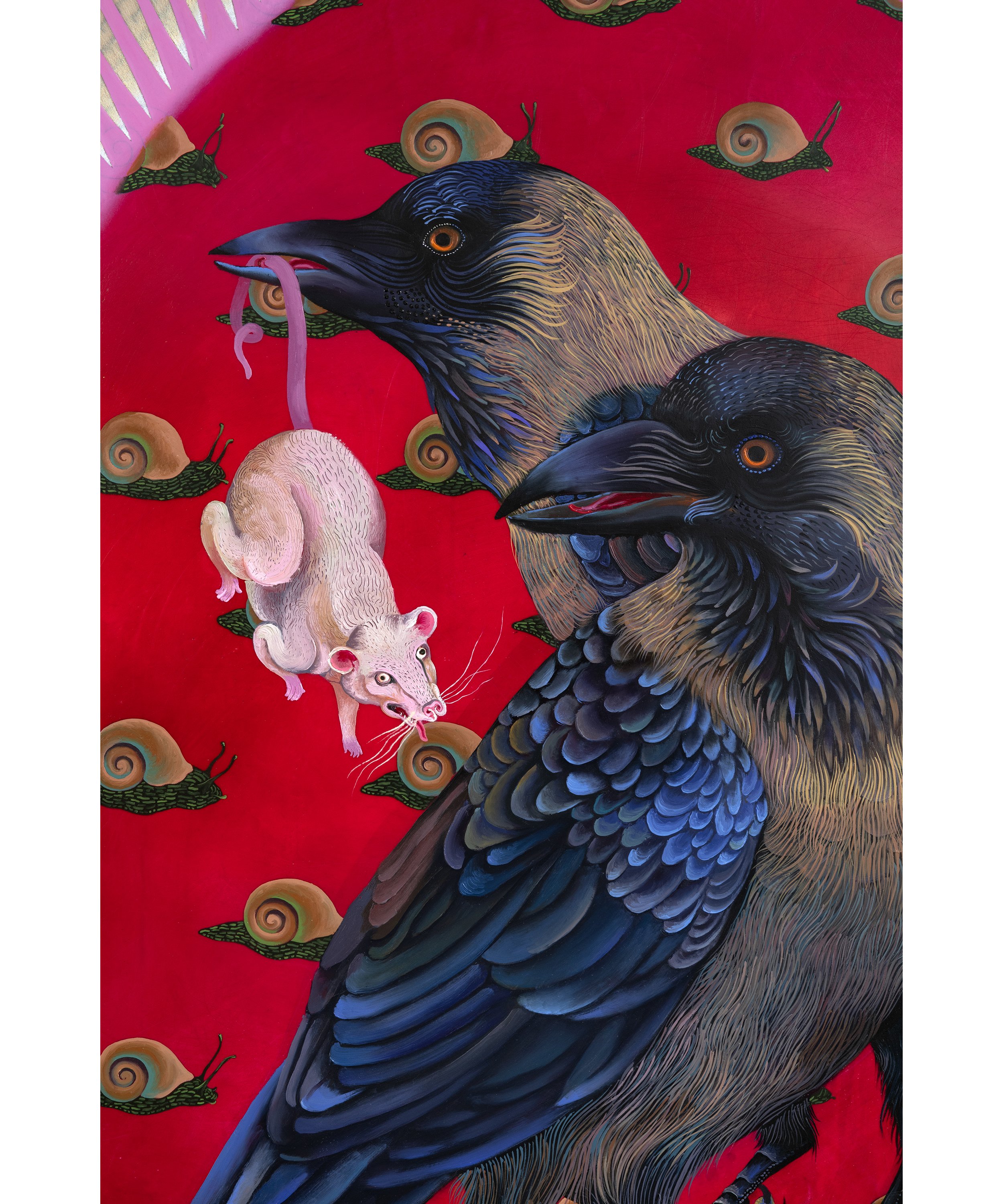
One Red Blood
Oil, acrylic, rose gold leaf, graphite, and color pencil on wood panel • 40 x 30 inches • 2024
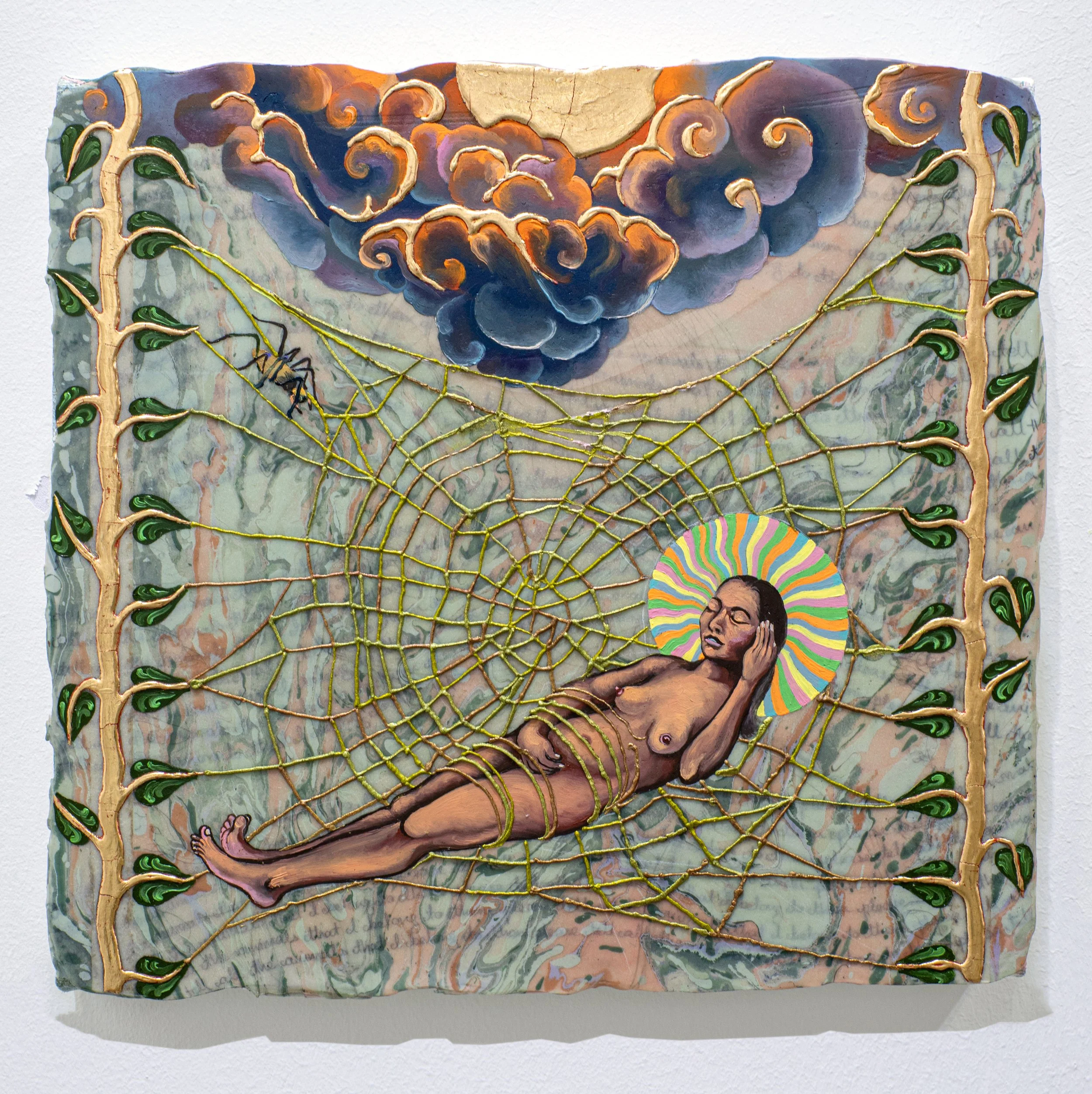
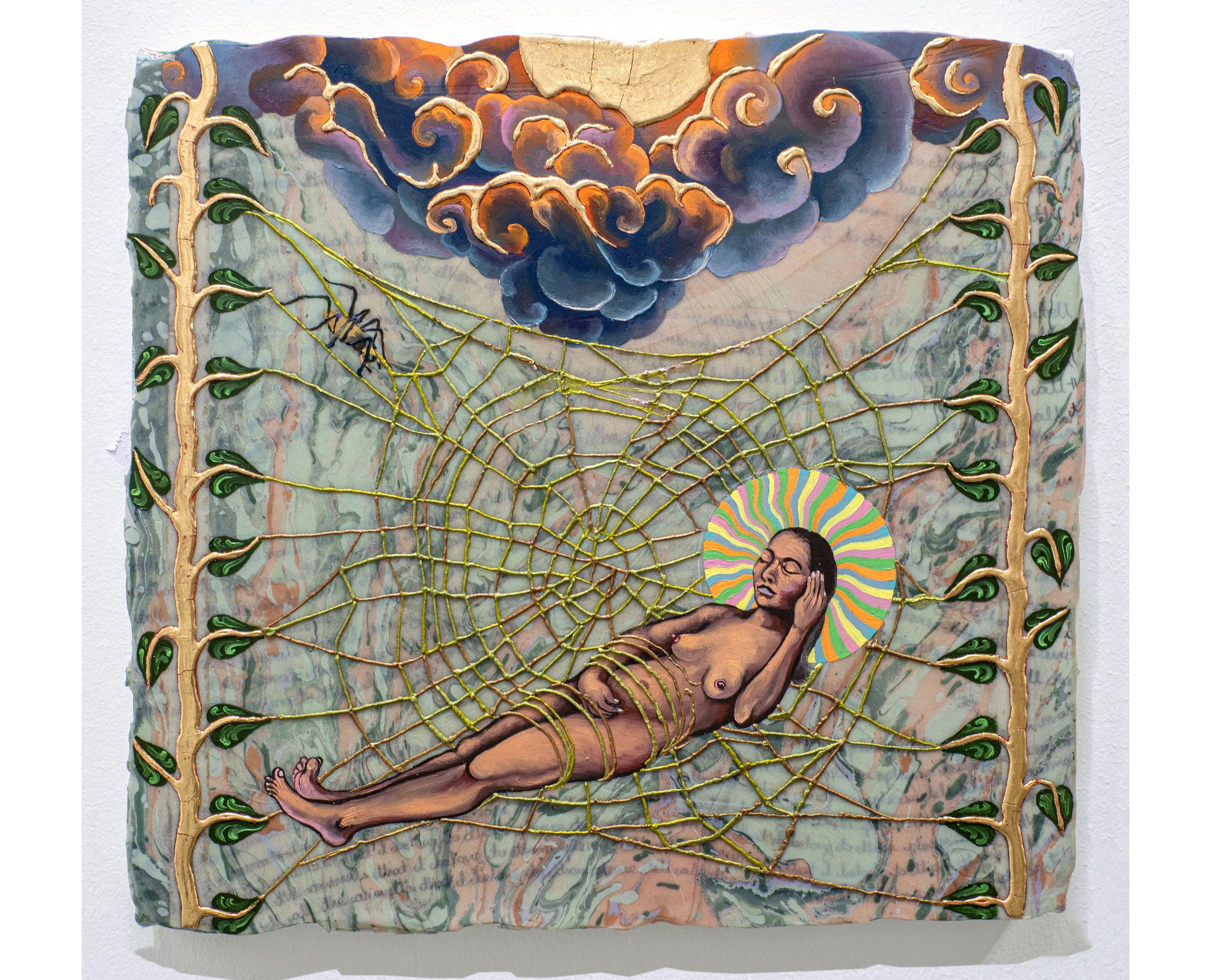
Untitled (Woman in a Web)
Oil, acrylic, rose gold leaf, and graphite on canvas • 11 x 12 inches • 2024
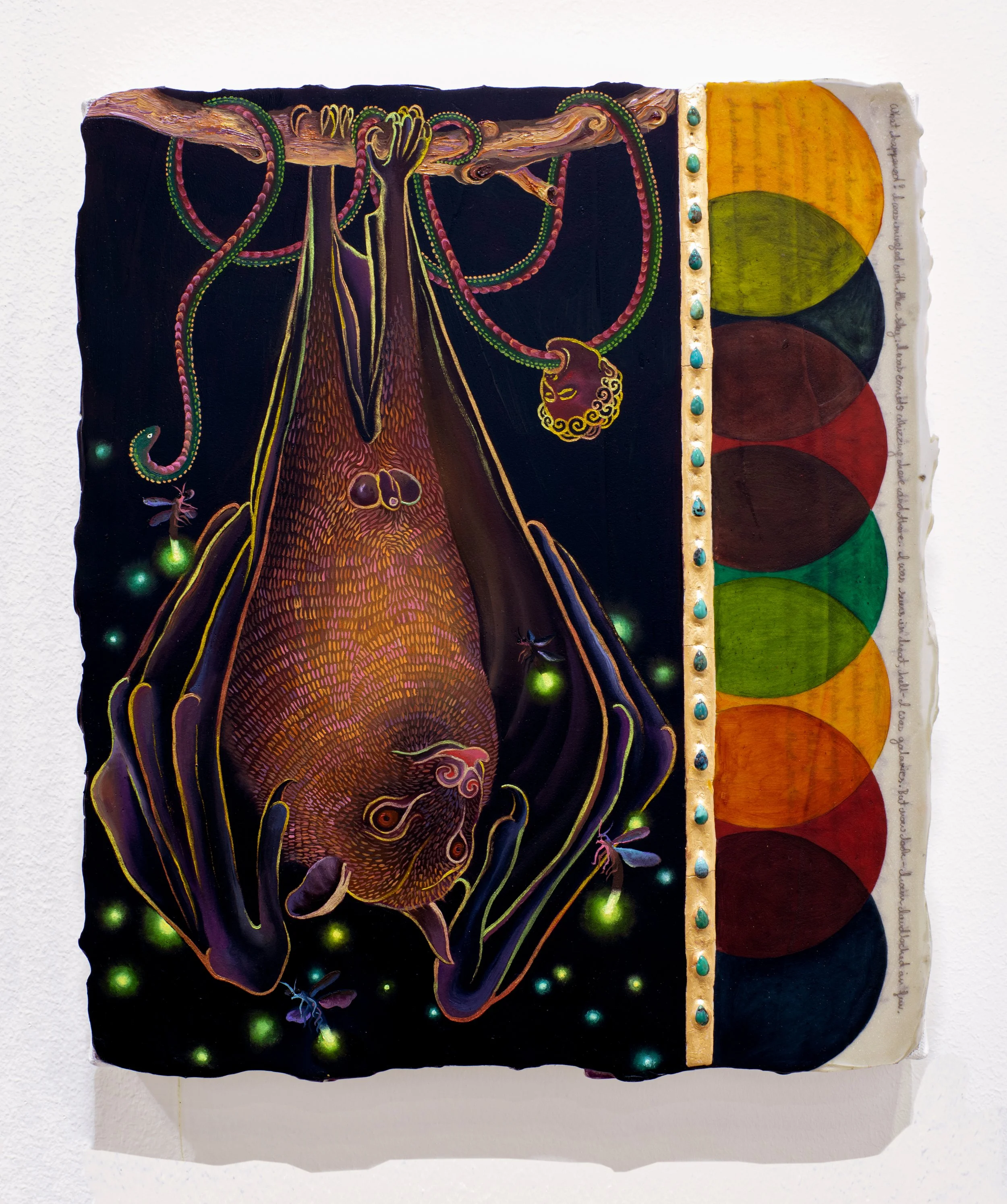
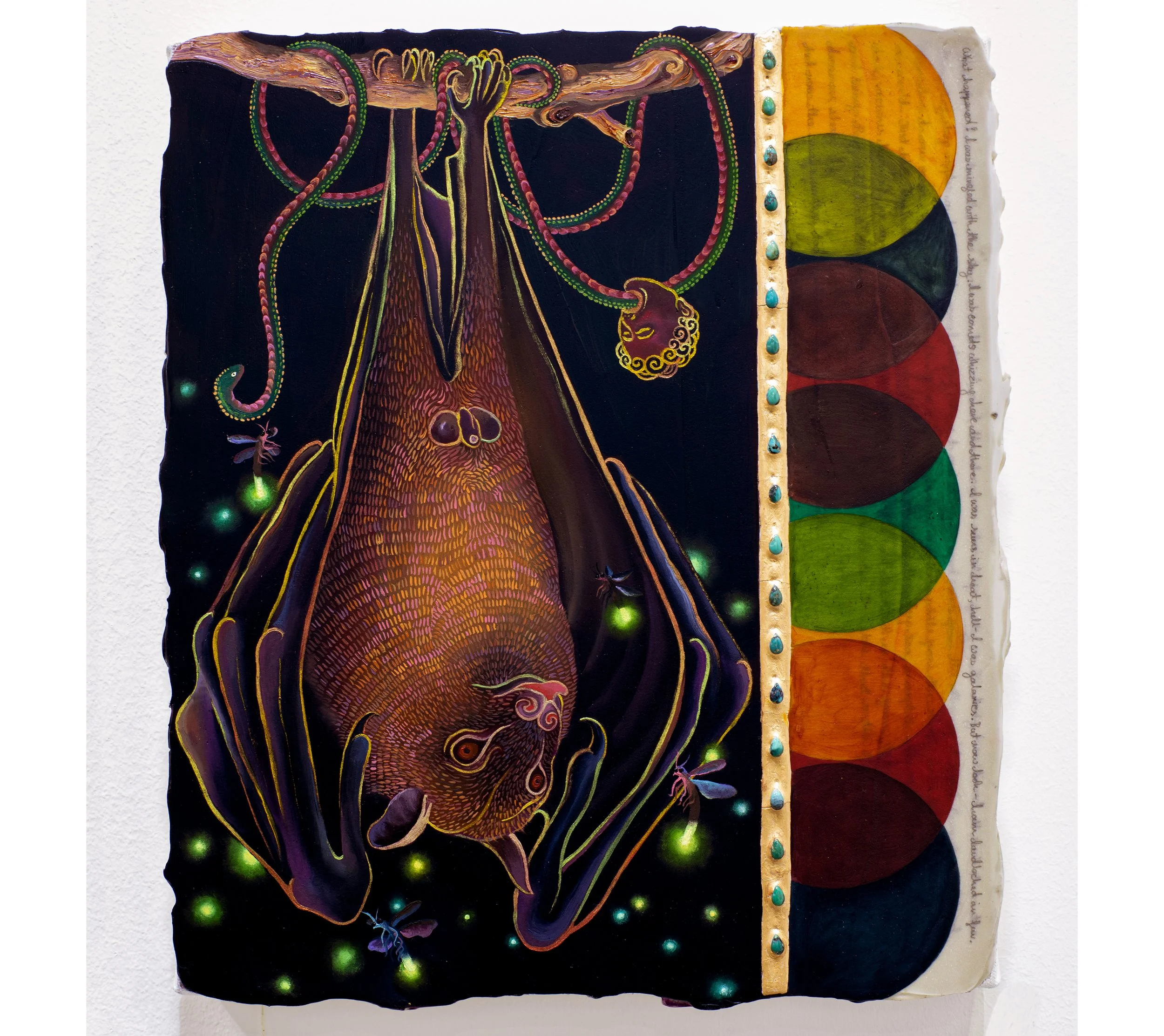
Night Angels
Oil, turquoise, rose gold leaf, and graphite on canvas • 14 x 12 inches • 2024
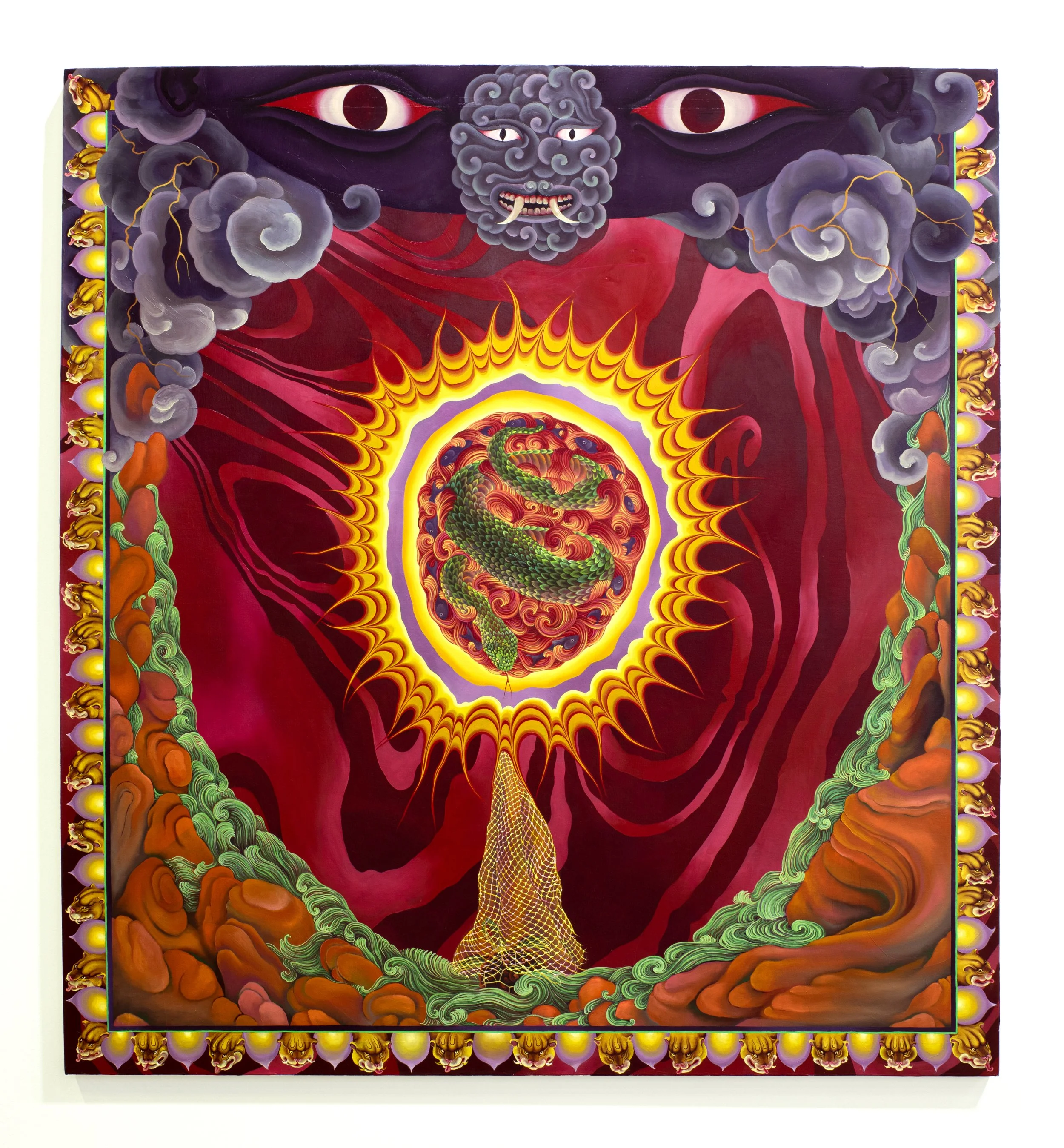
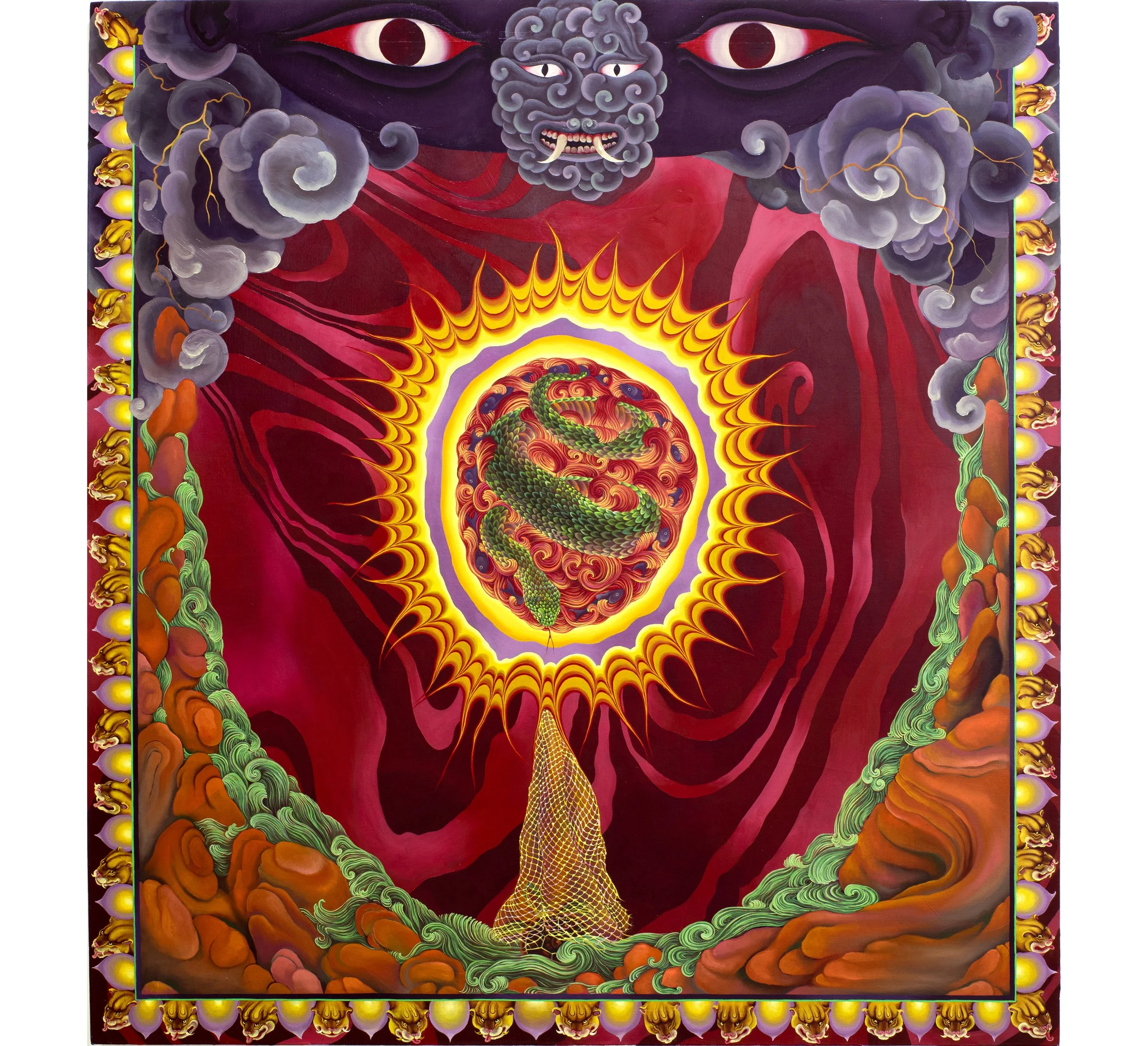
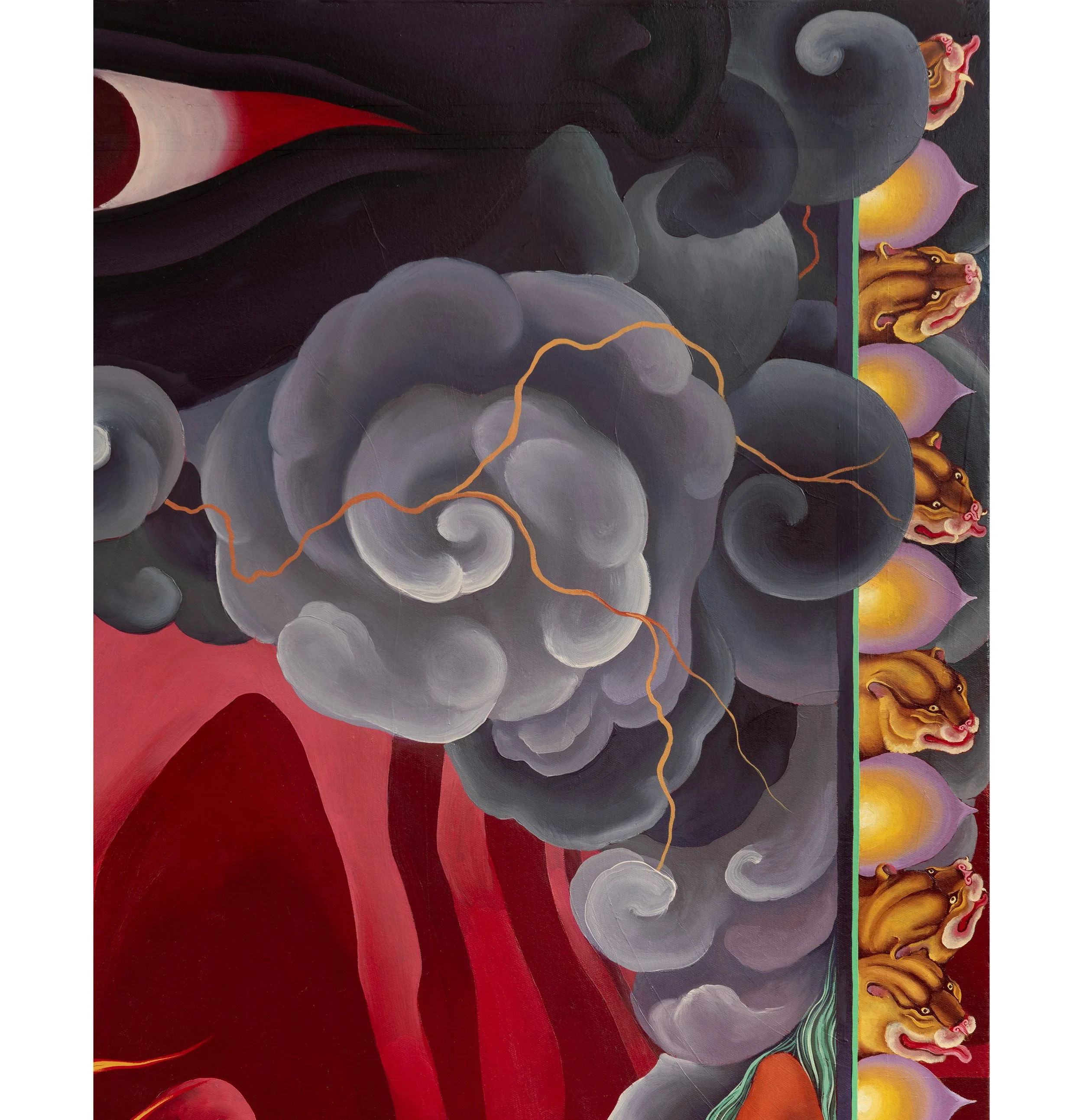
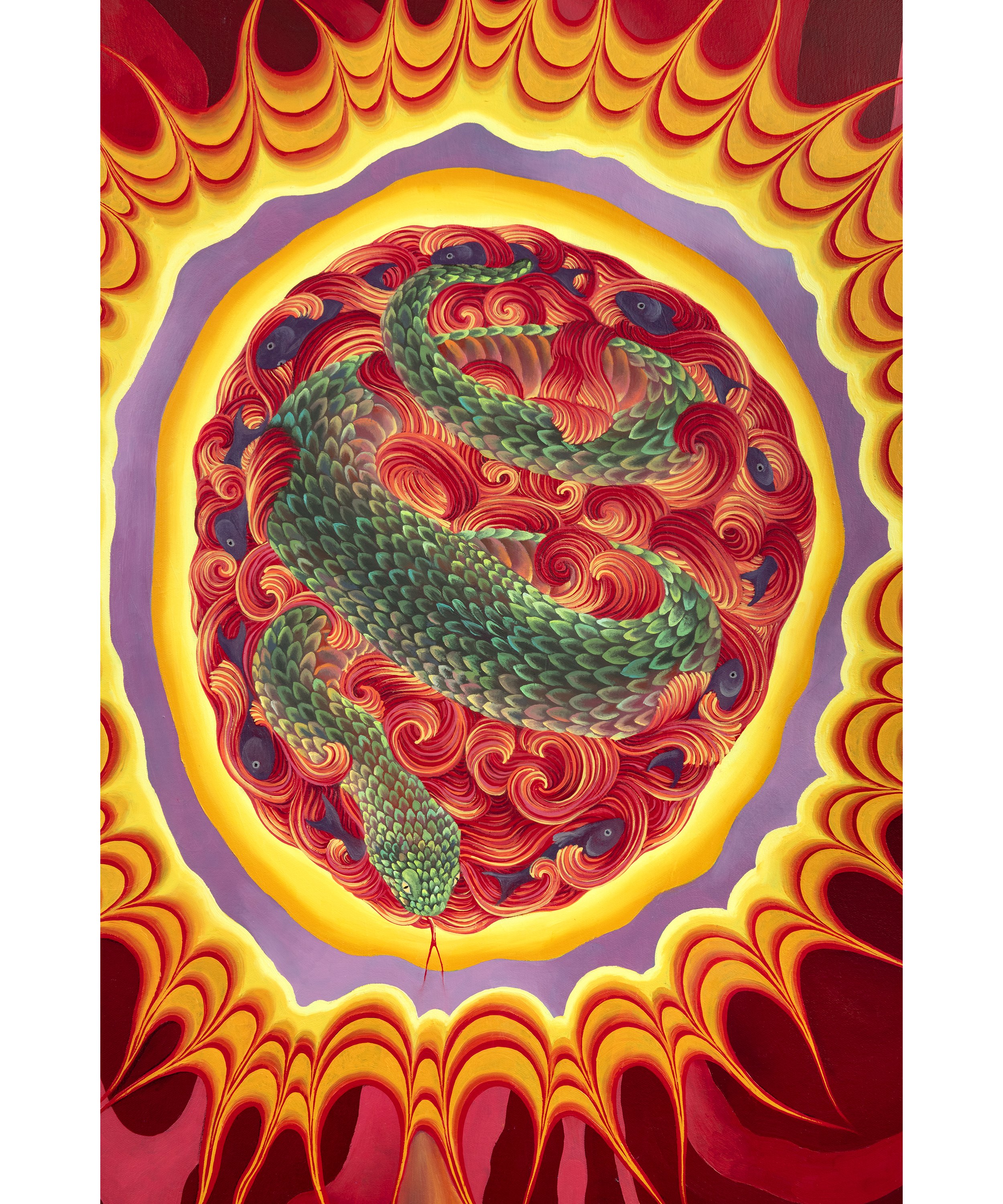
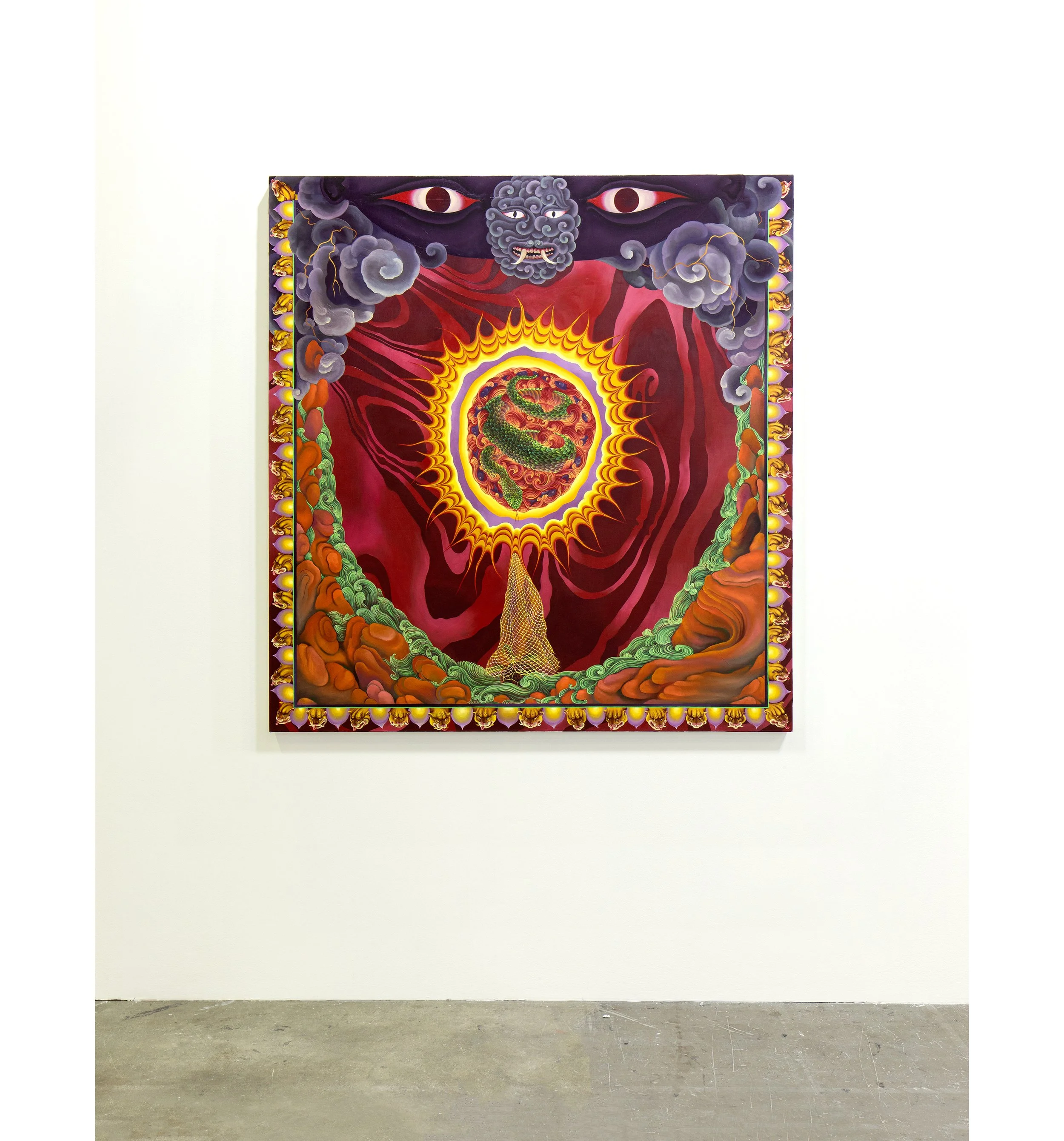
Night Dreams of First Light
Oil on canvas • 60 x 56 inches • 2024
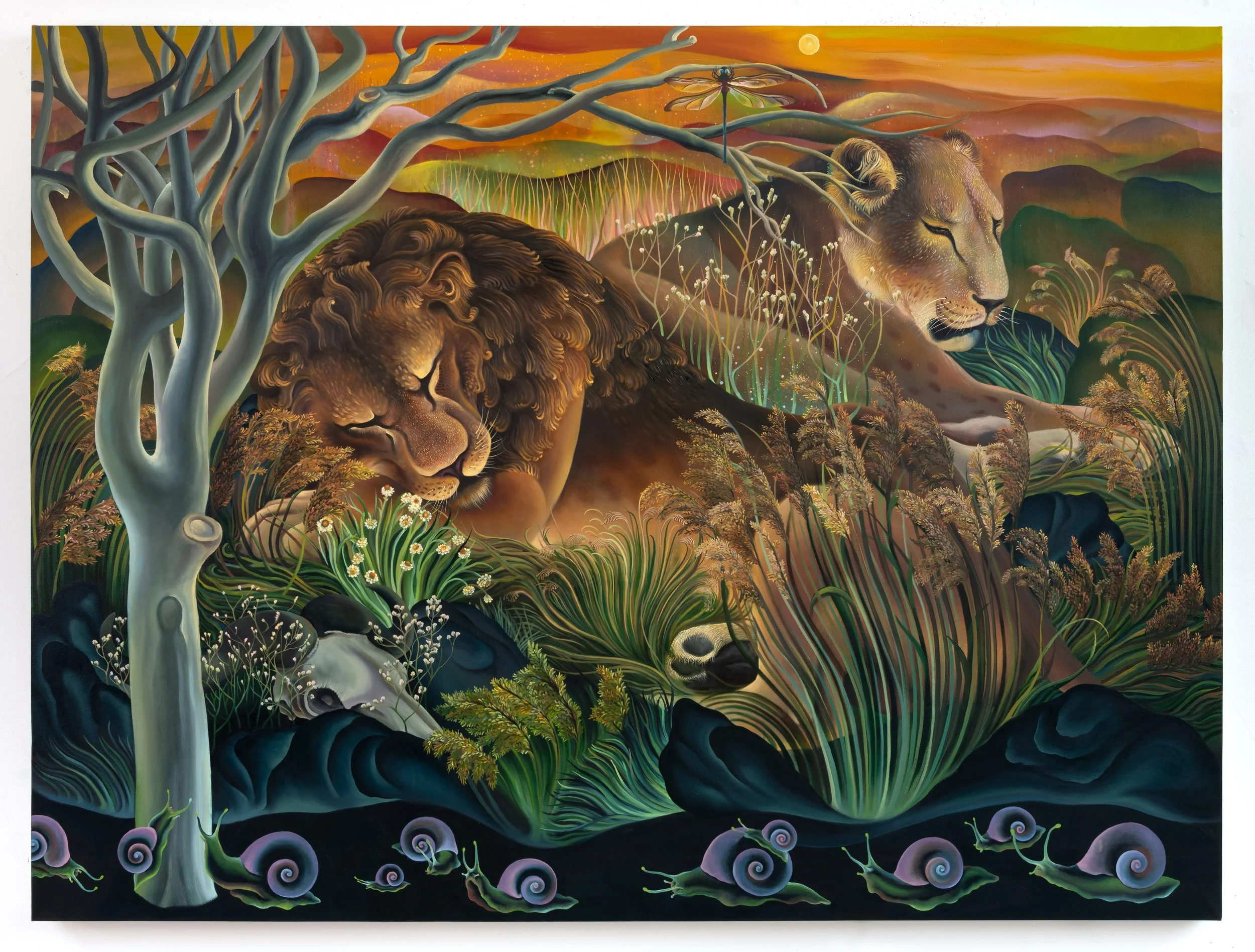
Once the World was Perfect
Oil on linen • 60 x 80 inches • 2024
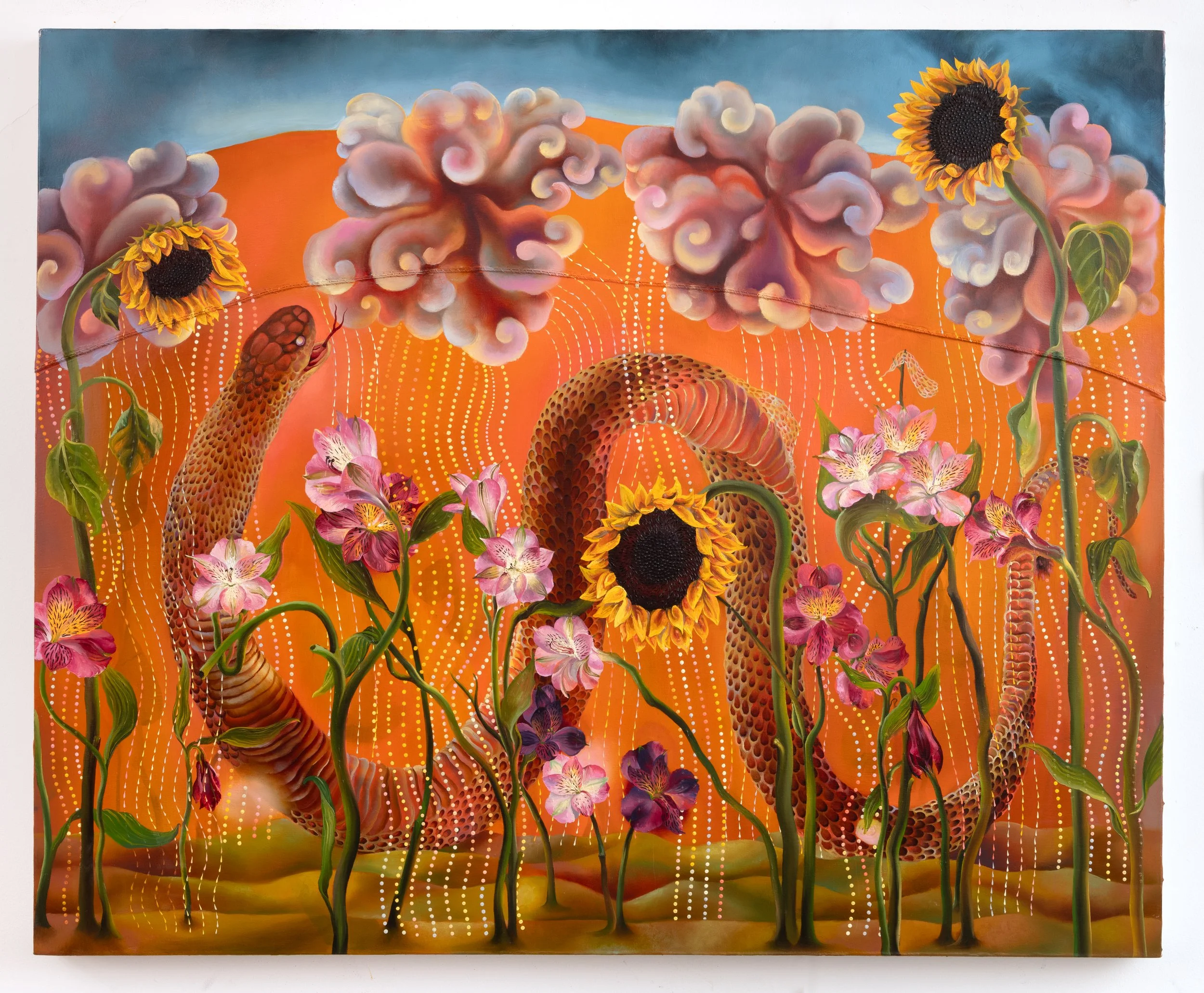
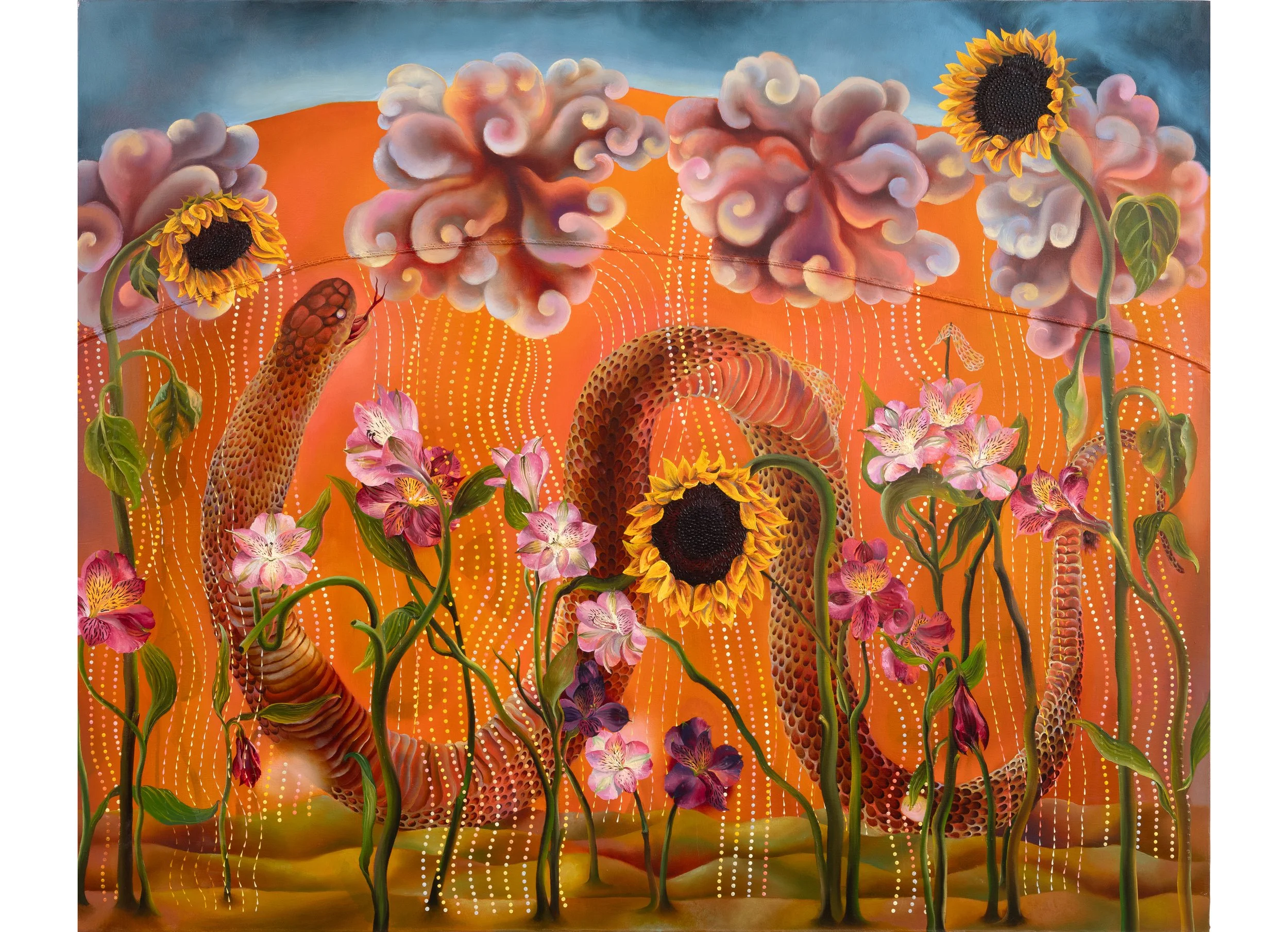
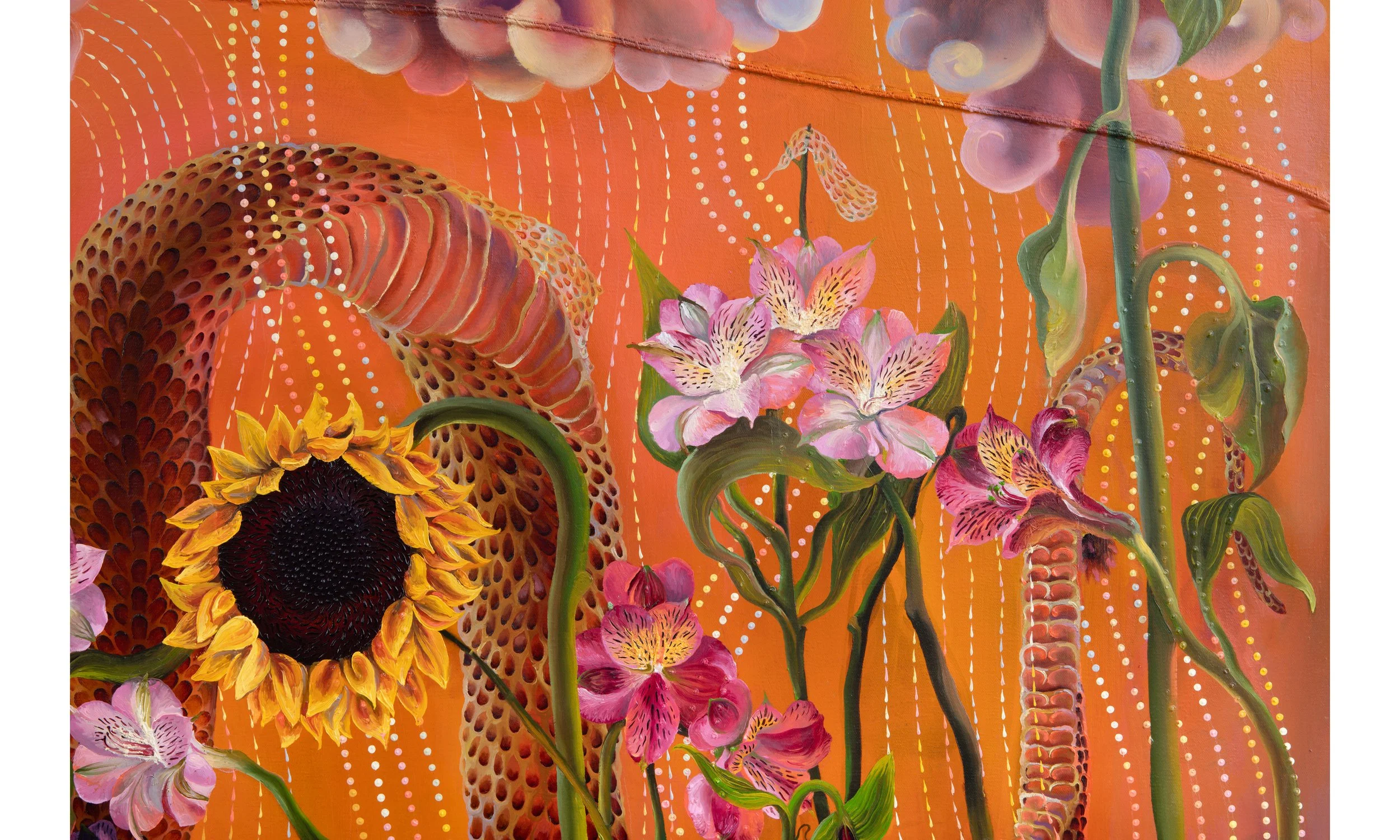
Rains that open
Oil on canvas • 45 x 55 inches • 2024
Catalogue
Catalogue
Click here to view the PDF of the exhibition catalogue, which includes an essay by Alex A. Jones, published by Fridman Gallery
